The advice everyone repeats is “check your bonfire for hedgehogs before you light it”. That is the weak version. A hibernating hedgehog will not move, will not rustle and will not give itself away — so the charities don’t tell you to look at the pile. They tell you to move it.
No products on this page, and no affiliate links. This one needs a broom handle, a torch and a cardboard box — things you already own. We earn nothing from this page and nothing from the organisations linked at the bottom.

Why looking isn’t enough
The Woodland Trust puts a hedgehog’s heart rate at “usually around 190 beats per minute”, dropping to “just 20 during hibernation”. Hibernation “can take place any time from October to April” — which covers Bonfire Night exactly.
An animal in that state does not bolt when you lift a branch. Checking a pile assumes something that would reveal itself. That inference is ours, not the Woodland Trust’s — but it is the reason both hedgehog charities put moving the pile ahead of inspecting it.
Move, check, offer
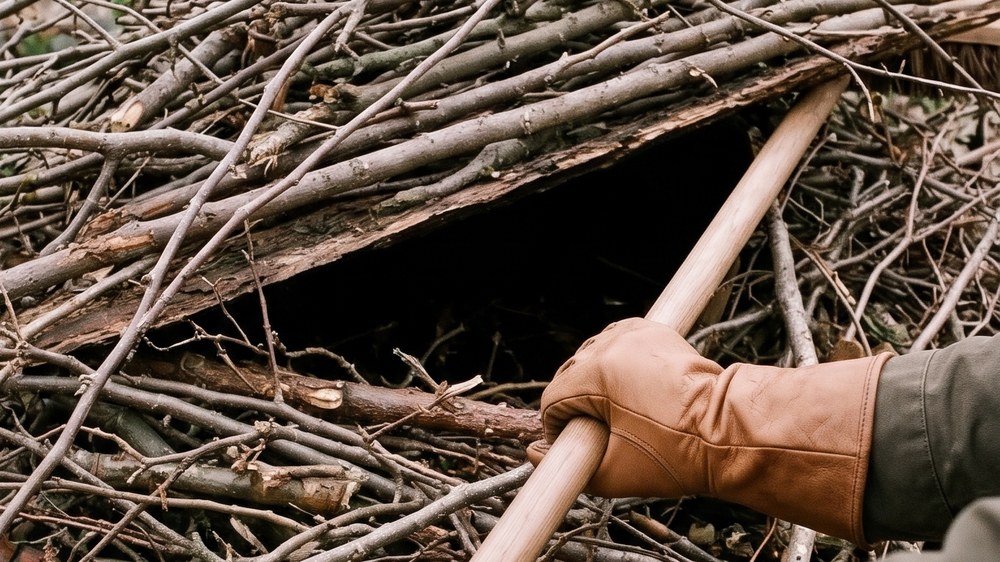
The British Hedgehog Preservation Society reduces it to three steps: “MOVE the materials to clear ground on the day they’re to be lit”, “CHECK the pile carefully just before striking that match”, and “OFFER an escape route by only lighting from one side.”
Checking is still in there. It is step two, not step one.
Better still: don’t build it in advance
The Wildlife Trusts are blunt about it: “Build the bonfire on the same day that you will light it.” Their reasoning is simply that “the longer it’s left for, the more likely it is that a hedgehog will wander in.”

Never a fork or a spade
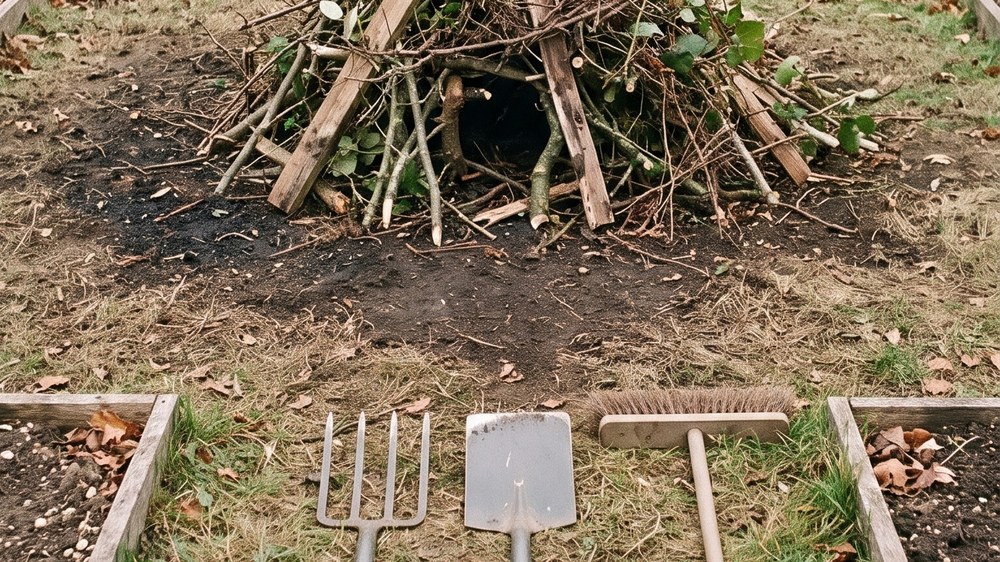
BHPS again, and this one is worth reading twice: “Never use a spade or fork as these can stab them.” Lift “section by section with a pole or broom” instead.
Where they actually are
Not scattered through the pile — BHPS say they hide in the centre, in the bottom two feet. That is also where a fork goes in. “Using a torch will help to see any signs of life”, and they add something easy to miss: “listen for a hissing sound, as this is the noise they make when disturbed.”

And never on a heap of leaves
The Wildlife Trusts: “Always place the bonfire on open ground” — never on leaves, because “a hedgehog may be hiding underneath.” No amount of checking the pile finds an animal that is under it.

If you find one
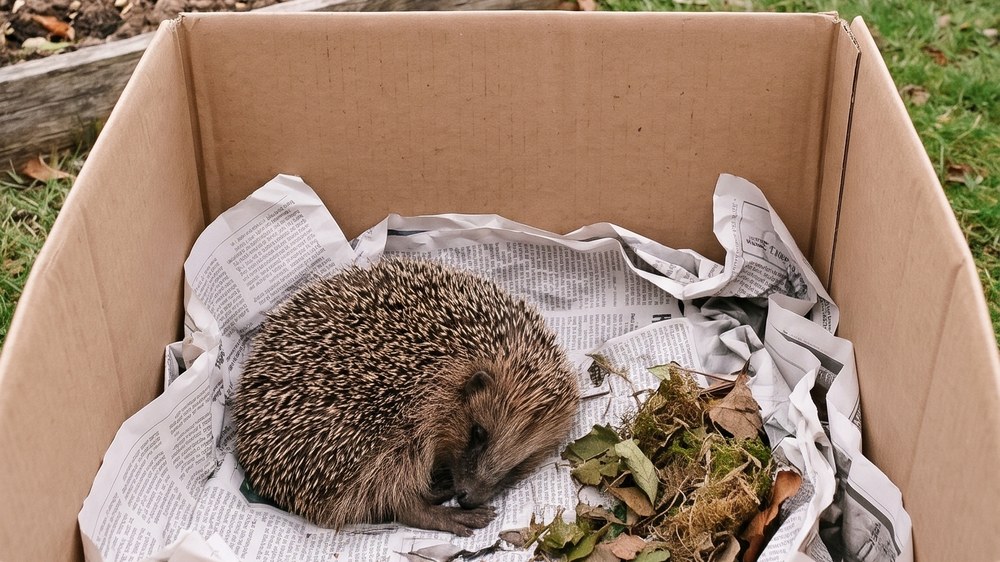
The Wildlife Trusts’ procedure, in their words: “Pick it up with gardening gloves, along with any nesting material it may have been sitting in”, “place it in a cardboard box lined with newspaper”, then “relocate the box to a safe location and release the hedgehog under a bush or log pile.”

Then light one side only
The last of the three BHPS steps, and the one that costs nothing: “OFFER an escape route by only lighting from one side.” Anything still in there has somewhere to go.

Our view
We should own this one. Two of our own recent videos told you to leave stems and seedheads standing and to bag up fallen leaves and stack them out of sight. The Woodland Trust lists urban hedgehog nest sites as “stacks of logs, compost heaps or under garden sheds”.
Both pieces of advice are still right — a garden with undisturbed corners is a better garden for wildlife, which is rather the point. But it does mean the habitat we have spent a fortnight encouraging you to make is the same habitat that gets burned on the fifth of November. Worth knowing before you strike a match.
Sources
Every quotation on this page was taken from these three organisations and checked against the page it came from:
- The Wildlife Trusts — building on the day, open ground, and what to do if you find one.
- British Hedgehog Preservation Society — move, check, offer; the pole-or-broom method; never a fork or spade; the torch and the hiss.
- Woodland Trust — hibernation timing and the heart rate.
The inference that a hibernating animal will not reveal itself when disturbed is ours, drawn from the heart-rate figure. None of the three organisations state it in those terms.
If this was useful, the people who did the research could use your help. The British Hedgehog Preservation Society is a UK charity, and that page is their own. We get nothing if you give them something — we just think it is the right place to send you.