AD The product links below are affiliate links. If you buy through one we may earn a commission, at no extra cost to you. It does not change what is said about a product, and nothing is here because it pays.
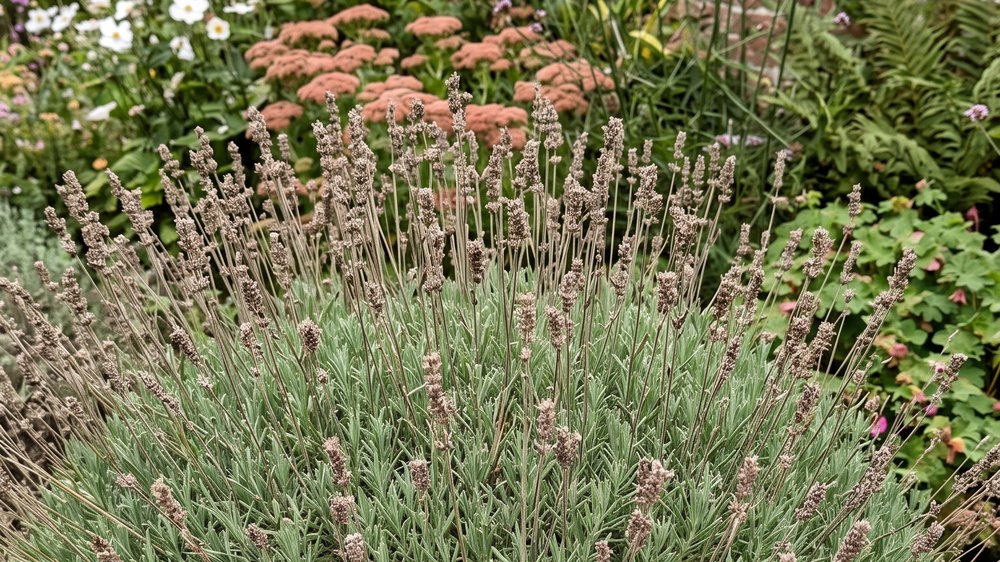
The short version of the video: lavender gets trimmed once a year, just after it finishes flowering, and there is a deadline. Get it done by the beginning of October. The only cut that really goes wrong is the one that goes too deep.
Why the date matters
Just after flowering. The RHS puts the annual trim in late summer, as soon as flowering has finished. In most UK gardens that is now.
And finished by early October. The plant responds to a trim by pushing out new growth, and that growth needs time to firm up before the first hard frosts. Cut too late and you go into winter with soft new shoots on the plant, which is worse than not having cut at all. Gardens Illustrated is explicit: finish pruning by the beginning of October, preferably earlier.
The one rule
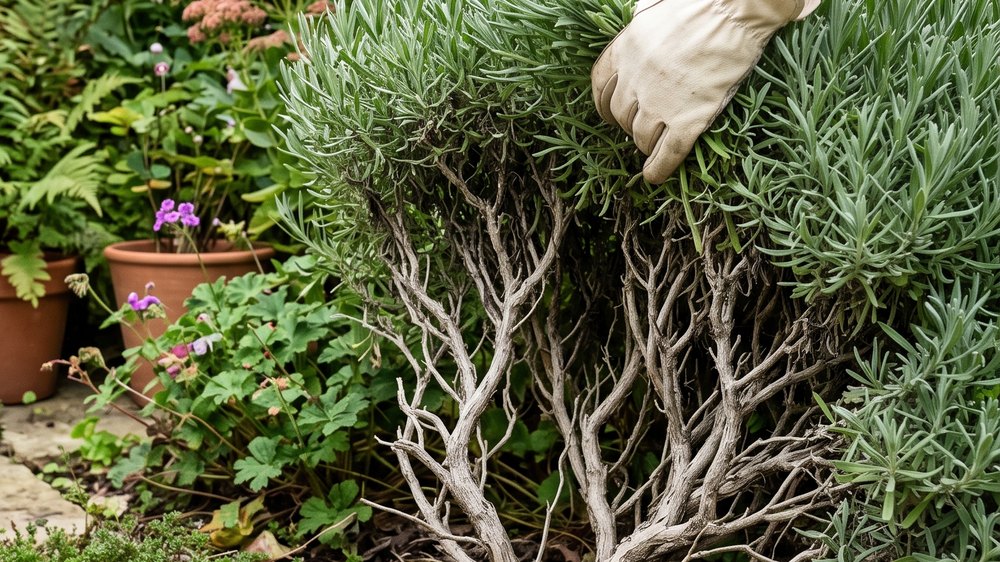
Never cut into the old wood
The mistake that does not grow back
Lift the foliage on any established lavender and this is what is underneath: a framework of bare grey stems with no leaves on it at all. That wood is structural, not dormant. The RHS is unambiguous — lavender does not break new growth easily from old stems, so do not cut back into them.
Cut a stem off below the last leaves and nothing comes back from the stub. Do it all over the plant and you have a dead-looking skeleton that stays that way. It is the single most common way a healthy lavender gets killed by tidying.
So the working rule is simply: keep green below the blade. Wherever you cut, there should still be leafy growth left on the stem beneath the cut.
How much to take
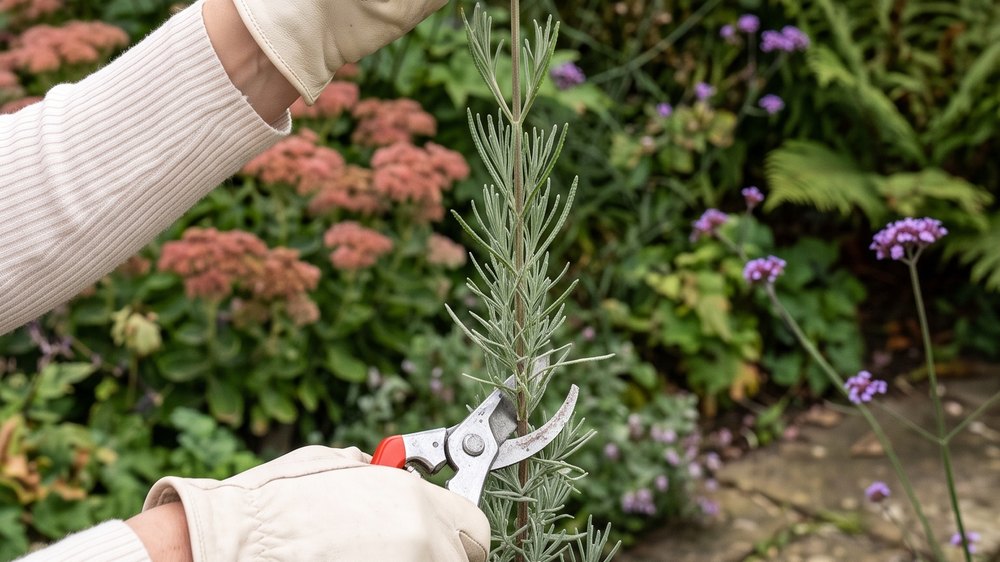
The stalks, plus about an inch
Less than most people expect
- All the spent flower stalks. Every one, right down to where it leaves the foliage.
- About 2.5 cm of leafy growth. That is the RHS figure — spent stalks plus roughly an inch of leaf. Gardens Illustrated says 2–3 cm for the same job. An inch is the number to hold in your head.
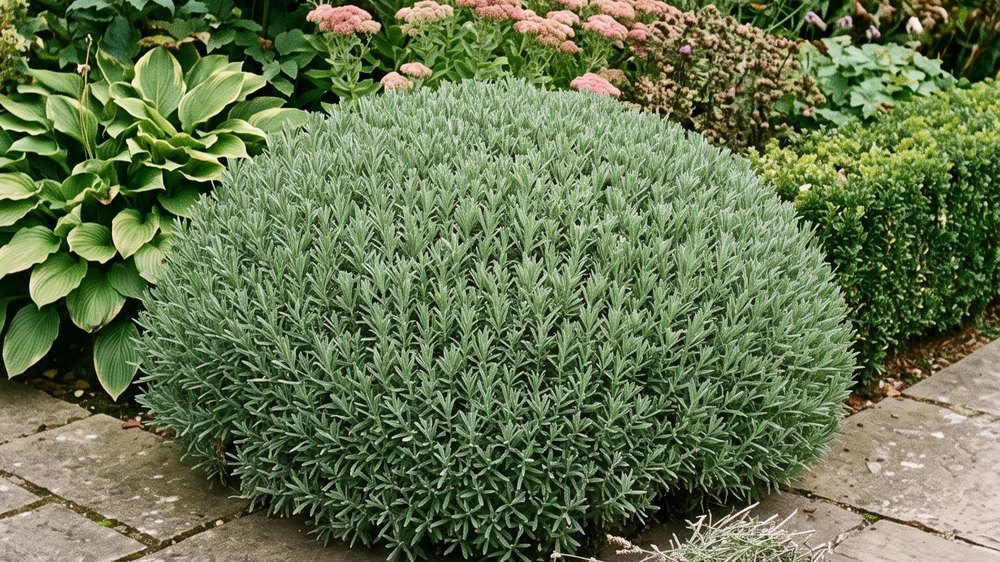
- Aim for a dome. Work round the plant keeping the shape even. Doing this every year is what keeps a lavender compact; skipping a few years is what makes it sprawl open in the middle.
- It should still look like a plant afterwards. If the result is bare sticks, too much came off.
Shears or secateurs
Our view Neither the RHS nor Gardens Illustrated specifies a tool for this, and as far as the plant is concerned it does not care — a clean cut in the right place is a clean cut in the right place. What follows is our own practical take, not guidance from either source.
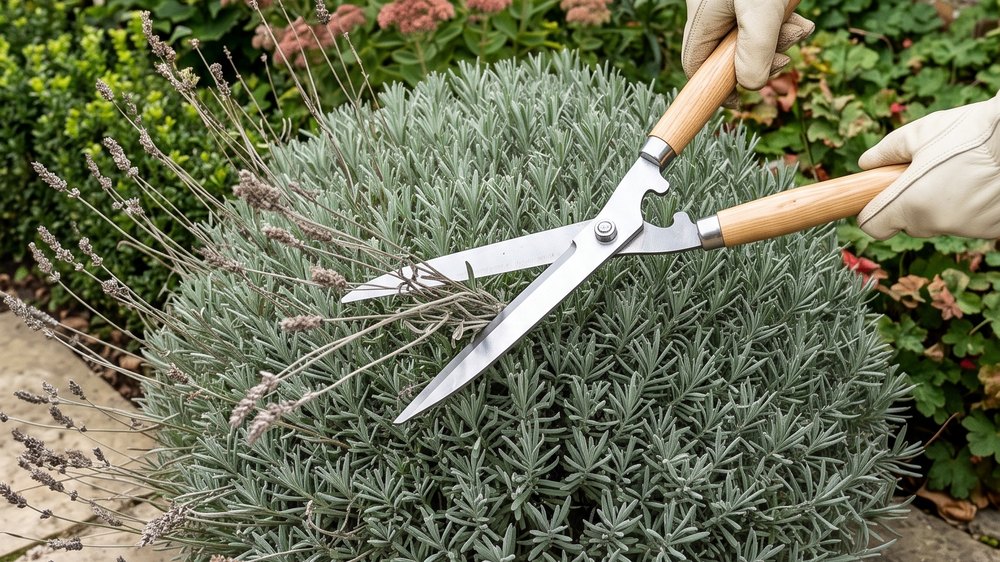
Shears, for anything dome-shaped
Faster, and the shape comes out better
On a well-kept plant you are taking off dozens of thin stalks at the same height. Shears do that in a few sweeps and give a more even dome than working stem by stem, because you are cutting to a line rather than to a series of individual judgements. Short handles keep the blades close and controllable; long-handled hedge shears are too much tool for a knee-high plant.
- Straight blades, and sharp. Lavender stems are thin and wiry, and blunt blades push them aside rather than cutting them.
- Keep the blades skimming the surface of the dome. The wood is well below where you are working, which is exactly why shears are safe here — on a plant that has already sprawled open, they are not.
Secateurs, when you want to see every cut
Slower, but you place each one
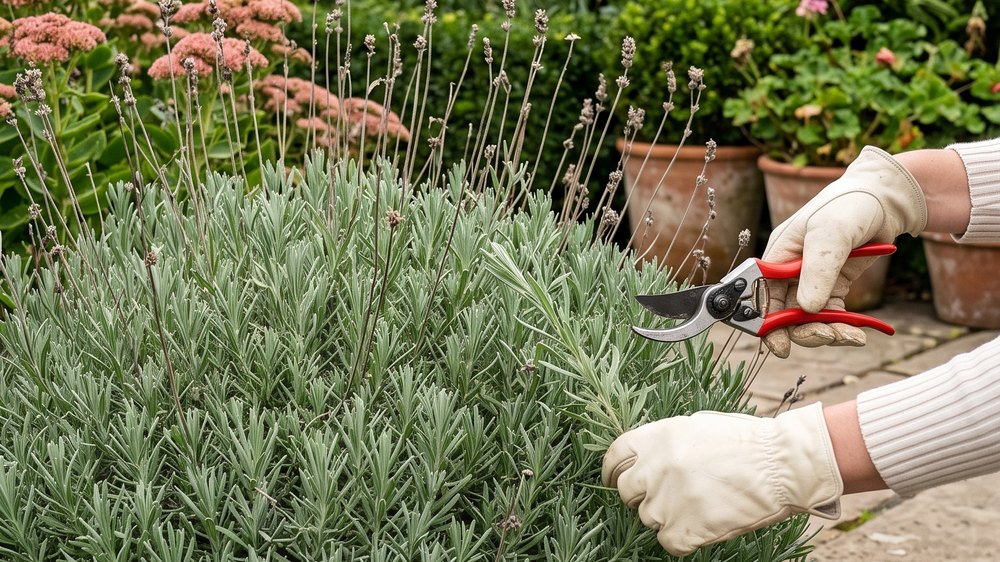
Worth reaching for when the plant is small, an awkward shape, growing through something else, or when you are not confident where the wood starts. One stem at a time is slow, but you can see exactly what you are cutting and nothing happens by accident. It is also the right tool if a plant has an odd branch or two that need taking back further than the rest.
- Bypass, not anvil. Bypass blades pass each other like scissors and leave a clean cut. Anvil secateurs crush a thin stem against a flat plate, which is the wrong action for soft growth.
- Small is fine. Nothing on a lavender is thicker than a pencil in the part you should be cutting.
Two things worth knowing
Not all lavender is equally hardy. The rules above are for English lavender (Lavandula angustifolia), which is what most UK gardens have. The larger hybrid lavandins (Lavandula × intermedia) are noticeably less hardy, so the early deadline matters more for them, not less.
If yours has already sprawled, this is the wrong video. A lavender that has collapsed open in the middle with bare wood showing cannot be trimmed back into shape, because there is no green left to cut to. The RHS view is that old, straggly plants are better replaced than rejuvenated. Trimming a healthy plant every year is how you avoid ever getting there.
Images on this page are stills from the video and are AI-generated; the presenter is not a real person. Guidance on timing, on not cutting into old wood, and on how much to remove is from the RHS lavender growing guide and Gardens Illustrated on pruning lavender. The choice between shears and secateurs is our own view and is marked as such above. Gardening advice is general by nature — soil, aspect, variety and local climate all change the right answer. See how this channel works for how content is sourced and the terms it is published under.
← All kit lists