AD The product links below are affiliate links. If you buy through one we may earn a commission, at no extra cost to you. It does not change what is said about a product, and nothing is here because it pays.
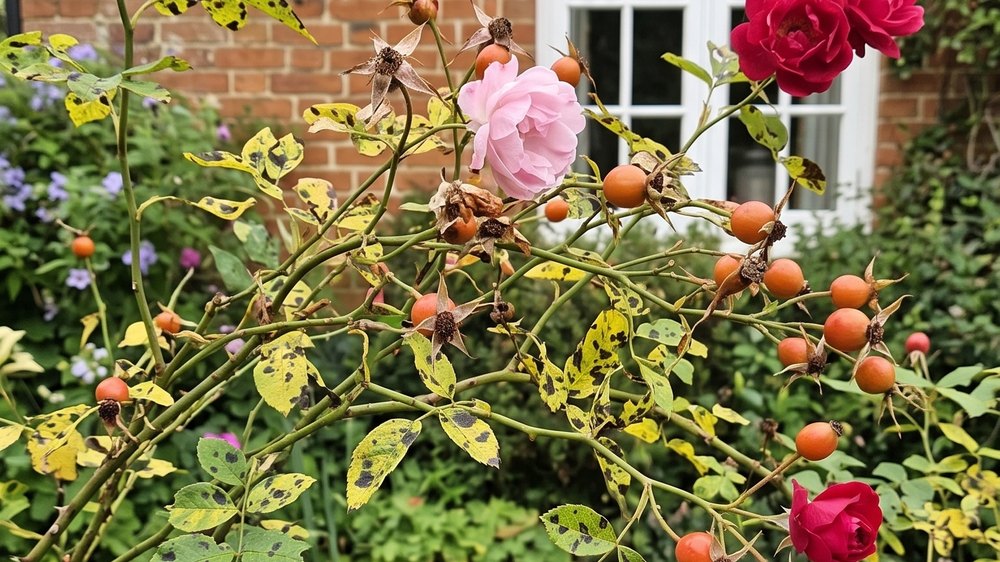
The short version of the video: the instinct in October is to cut roses back hard, and it is the wrong month for it. The real prune is a February job. There are only three things worth doing now.
Why the hard prune waits
The RHS puts the main prune of a shrub rose in late winter, when growth is just resuming — usually mid-February in the south, and March further north or in a cold garden.
Prune hard in autumn and the plant responds the way it always does: it pushes out soft new shoots. Those shoots have no time to harden, and the first real frost kills them. You have spent the plant's energy on growth you are about to lose, and opened fresh cuts going into the wettest months of the year.
One — take the tops off
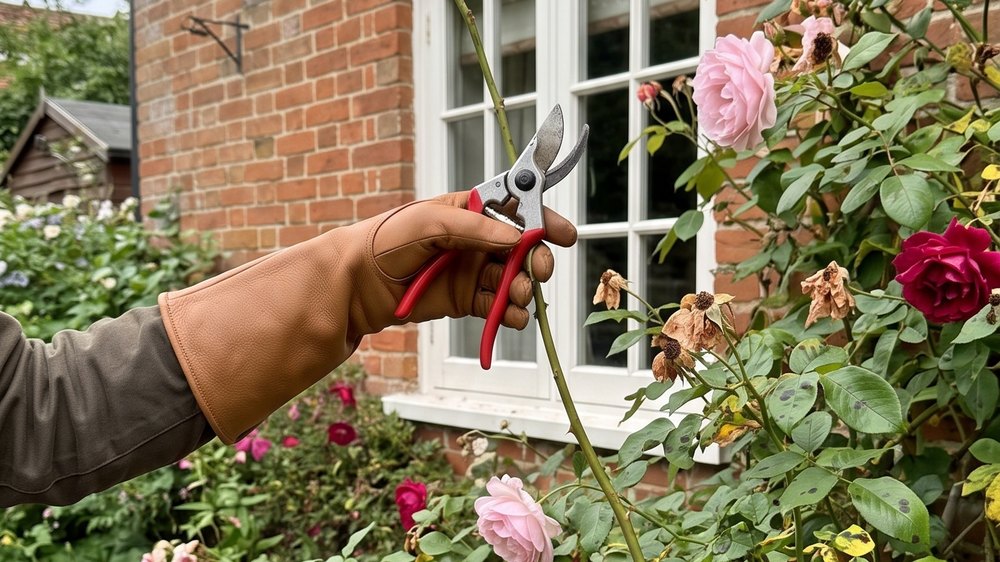
Just the tops, and only on the tall ones
Five minutes, and it is not pruning
Tall bush roses grow long whippy stems late in the season. Those stems act as a sail. Through a winter of gales they rock the whole plant, and the rocking works the soil loose around the crown until there is an open gap at the base and the roots are sitting in an air pocket.
Gardeners' World is direct about it: shorten the stems of tall bush roses to reduce wind-rock during winter gales, as this can loosen and damage the roots.
- Take roughly the top third off the tallest stems only. You are reducing leverage, not shaping the plant. Leave the rest alone.
- Do not tidy the whole bush while you are there. That is the February job and doing it now undoes it.
- Standard roses need it most. A lollipop head on a single stem catches the most wind of anything in the garden and can snap outright.
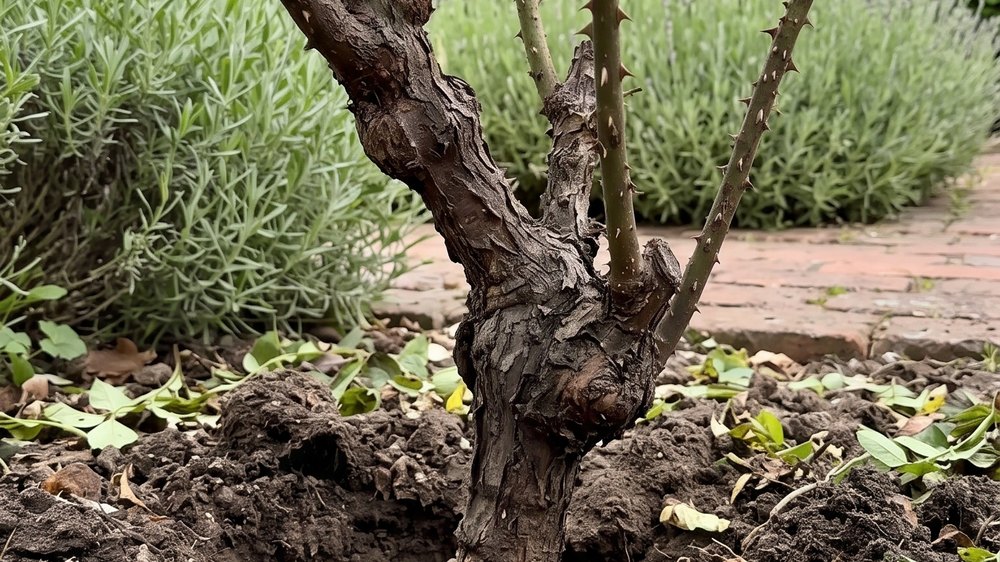
Two — pick up the leaves
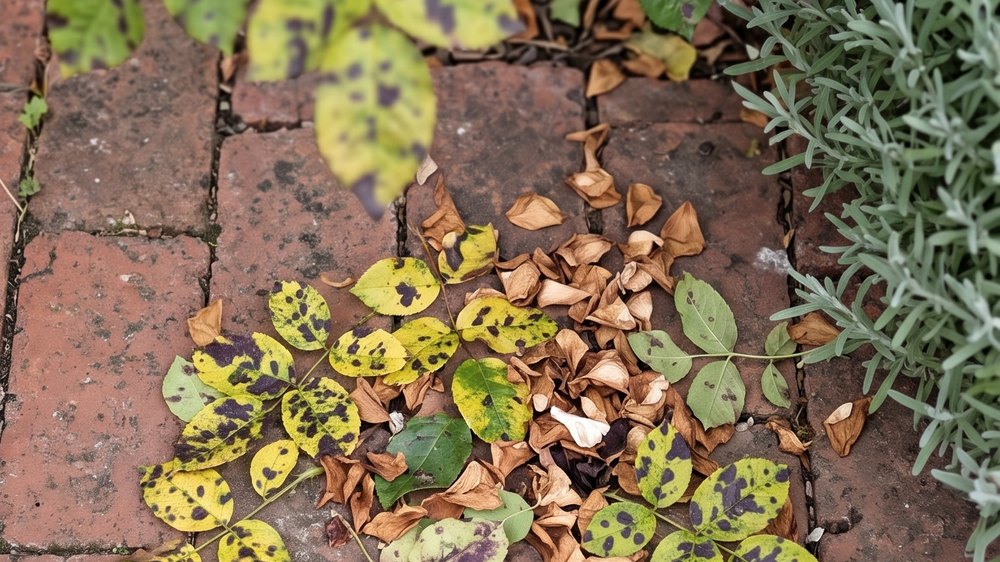
Blackspot overwinters on fallen leaves
The one job that pays off next June
Blackspot does not vanish when the leaves drop. The spores sit on the fallen foliage through winter and splash back up onto the new growth in spring. Gardeners' World is blunt about the consequence: fallen leaves can carry over diseases from one year to the next.
- Pick off any diseased leaves still on the plant as well as the ones on the ground.
- Bin them or burn them. Do not compost them, and keep them out of the leaf mould heap — a garden heap rarely gets hot enough to kill the spores, so composting them just moves the problem and spreads it.
- Clear right under the plant, including what has blown into the crown. That is where the reinfection starts.
Three — the hips, and the trade
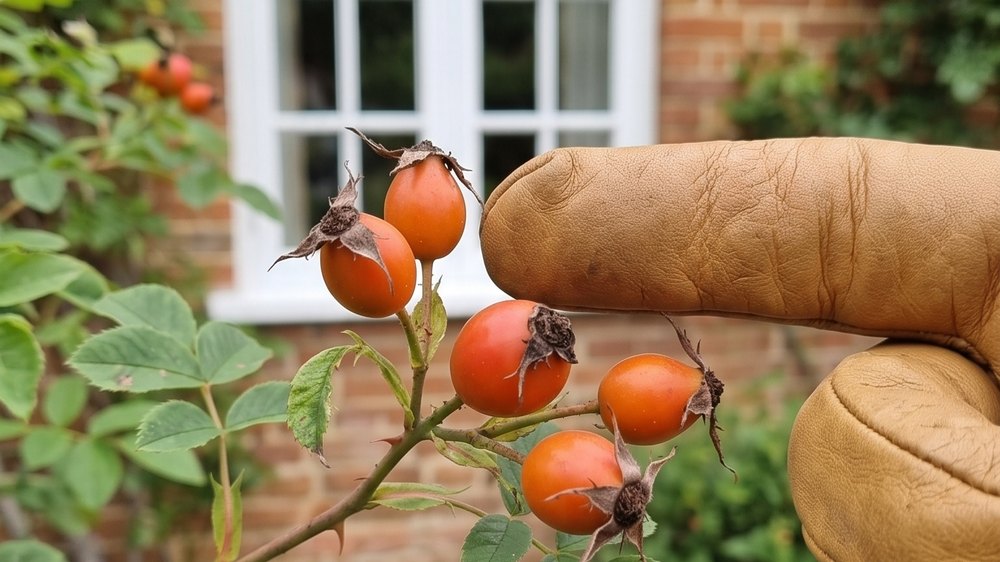
You can have flowers or hips, not both
The bit most guides skip
Deadheading works by stopping the plant setting seed, which is what keeps a repeat-flowering rose producing. So a rose you have deadheaded all summer will carry few hips or none — that is not a fault, it is the deal you made.
The RHS puts it the other way round: roses grown for their hips should never be deadheaded, and if you forget to deadhead the others for a season, you may see fewer flowers but some varieties will reward you with a colourful show of autumn hips.
- If yours is setting hips, leave them. They are good winter food for blackbirds and thrushes, and they carry the plant visually into December.
- Take the petals, not the head. A ruined soggy bloom will rot into the stem, so pull the mushy petals off — but leave the swelling hip behind them. Cut the whole head off and you have removed the hip with it.
- Species and rambling roses give the best hips. Rosa rugosa and R. moyesii are the ones to plant if hips are what you are after.
What you need
Secateurs, and something that stops the thorns
Two things, and you likely own one
Everything on this page is light one-handed work — tipping a few tall stems and nipping off dead heads. A bypass secateur does all of it. There is no loppers job here and no saw job; those come in February.
- Bypass, not anvil. Bypass blades pass each other like scissors and leave a clean cut that seals. Anvil secateurs crush the stem against a flat plate, which is the wrong action on live wood going into a wet winter.
- Gauntlets, not gloves. Almost every rose scratch is on the forearm, not the hand, and an ordinary glove stops at the wrist. A leather gauntlet with a sleeve guard is the difference between the job being fine and being unpleasant.
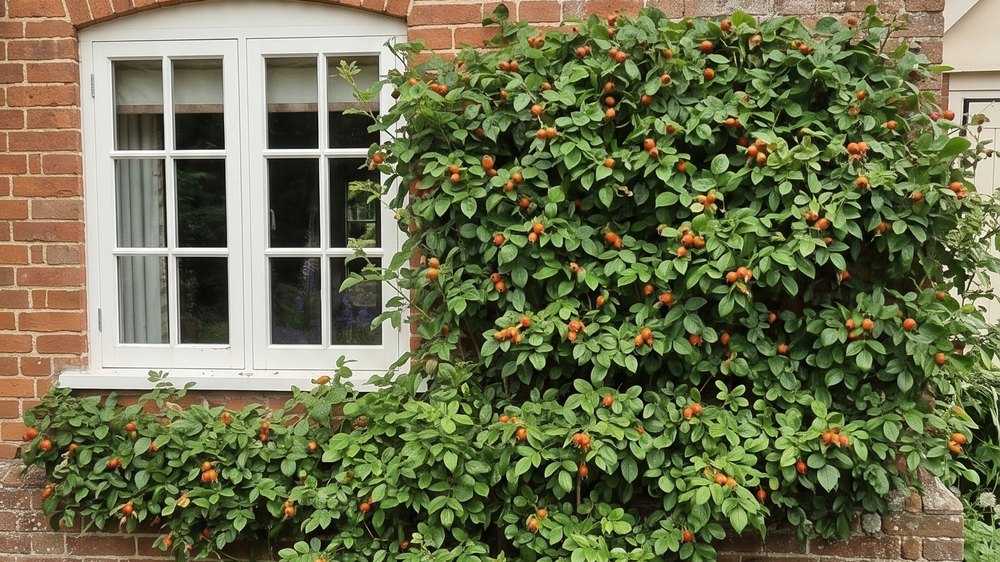
Come February, that is when the real work happens: dead and crossing wood out, an open-centred framework, and a hard reduction while the plant is dormant and can afford it.
Images on this page are stills from the video and are AI-generated; the presenter is not a real person. Guidance on pruning timing is from the RHS shrub rose pruning guide; on hips and deadheading from the RHS on roses for hips; and on wind rock, fallen leaves and deadheading technique from Gardeners' World on roses in autumn. Gardening advice is general by nature — soil, aspect, variety and local climate all change the right answer. See how this channel works for how content is sourced and the terms it is published under.
← All kit lists