No products on this page. This job needs a trowel. We looked at bulb planters, augers and bulb feeds for this one and linked none of them — the reasons are at the bottom, because two of them are worth knowing before you buy.
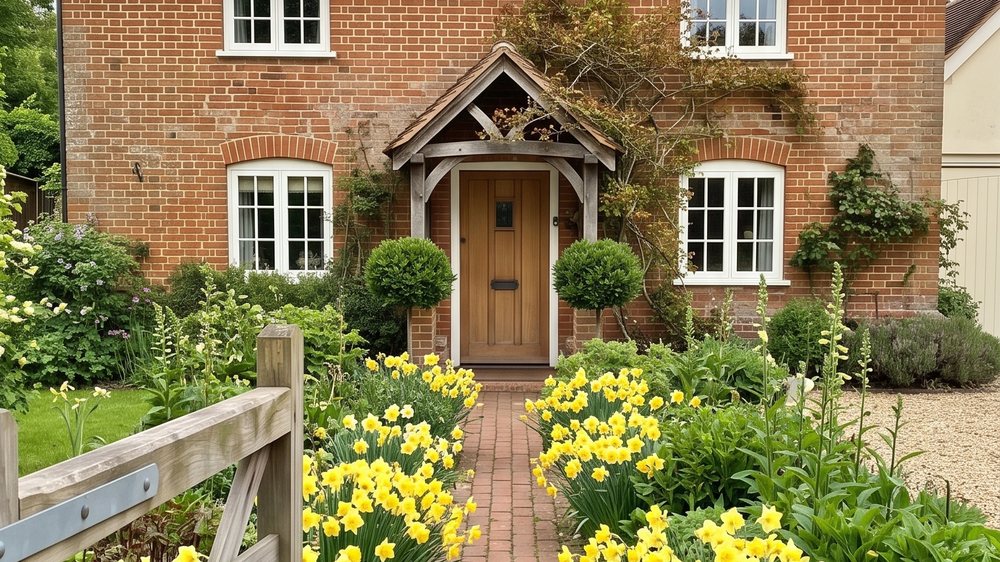
Two jobs, opposite deadlines. Daffodils should already be in. Tulips are better left for another month. The second half of that is repeated everywhere with a reason attached — and the reason turns out to be shakier than the rule.
Daffodils: you are already late, but only just
The RHS is specific: “Plant daffodil bulbs in early autumn, ideally September.” Early October is behind schedule rather than hopeless — get them in while the soil is still warm enough to make roots before winter.
Gardeners’ World puts the same bulbs in the same window, listing daffodils among the bulbs to plant “from September to November”. Nobody argues about daffodils. The argument is all about tulips.
One — the two bulbs, and how to tell them apart
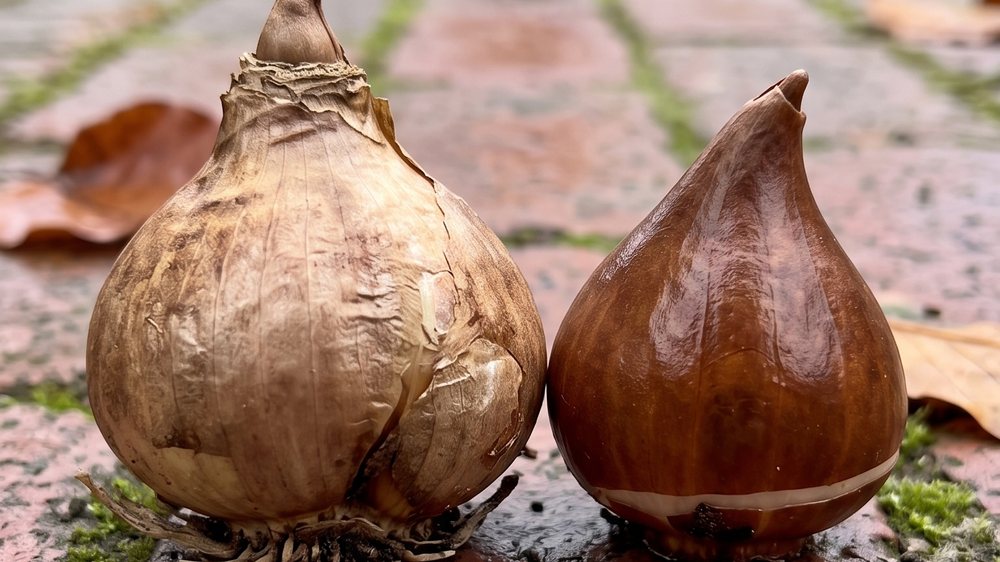
Fat and matt, or slim and glossy
Worth knowing before they get mixed in a bag
A daffodil bulb is bigger, fatter and rounder, in a dull light-brown papery skin, often two bulbs joined at the base. A tulip is smaller, slimmer and teardrop-shaped, wrapped in a thin glossy dark-chestnut tunic that comes away in your fingers.
- Both have a nose and a base plate. The flat disc at the bottom, with the dry wiry roots still attached, is the bottom — always. The pointed end goes up.
Two — the November rule, and where it comes from
Three sources, three different answers
The rule is sound. The reason is softer than you have been told.
Everyone says hold tulips until November because colder soil reduces tulip fire. We went looking for who actually says that, and found this:
- The RHS contradicts itself. Its tulip growing guide says bulbs are planted in “autumn (September to November)”. Its seasonal bulb guide says flatly “November – plant tulips”. Its page on planting tulips for colour says they “grow well when planted between September and December” and advises you to “plant as soon as you can after buying” — which is close to the opposite advice. None of the three gives a reason.
- Gardeners’ World gives the reason, and hedges it: “You can plant tulip bulbs from mid-October, but November is thought to be the optimum time as the colder conditions reduce the risk of the fungal disease tulip fire.” Note thought to be.
- A grower who stakes a garden on it is more definite. Philippa Burrough of Ulting Wick, writing for the National Garden Scheme, says “wait until the soil has cooled, ideally after the first frost”, because it “helps slow down the spread of viruses...and botrytis which causes the dreaded ‘Tulip Fire’”. She plants “from mid November... until the end of January.”
And the RHS’s own page on tulip fire never mentions planting time at all. Not as a control, not in passing. Which is a strange gap if the timing is the main defence.
So: wait until November. It costs nothing and people who grow thousands of tulips do it deliberately. Just do not believe it is the thing protecting you.
Three — what the RHS actually says stops tulip fire
Look at the bulb, not the calendar
Thirty seconds that matter more than the month
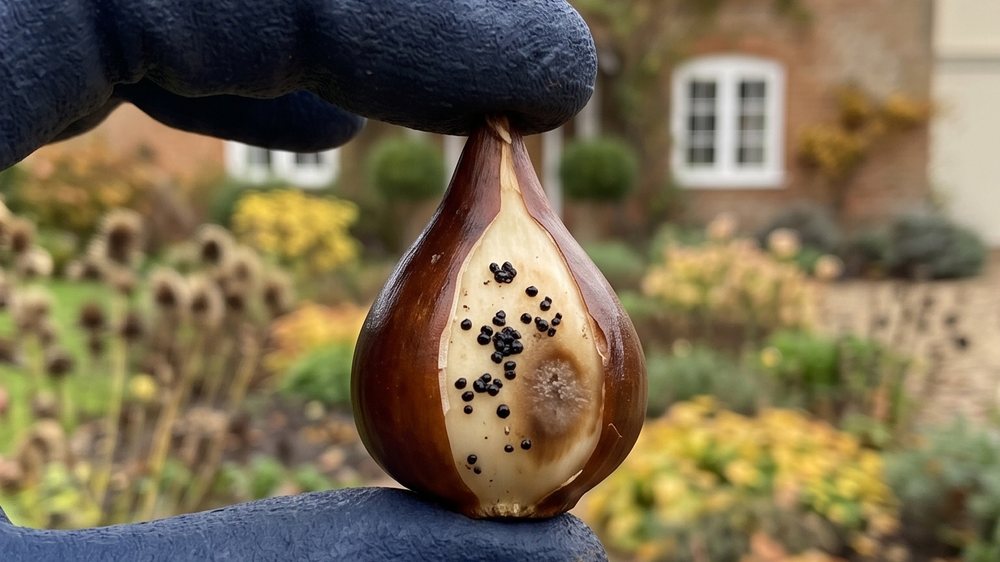
The RHS control is an inspection: “Check bulbs carefully and discard any with signs of the small black sclerotia in the outer scales, or with any signs of decay.” Those sclerotia are the small hard black specks in the picture — they are the fungus overwintering, and they go into your soil with the bulb.
- Peel the tunic back on anything suspect. Black specks, or a soft sunken brown patch, and it goes in the bin rather than back in the bag.
- One bad bulb is enough. This is the step people skip because the bulbs arrive looking like a bag of onions.
And if you have had it before, that ground is out
The rule that actually costs you something
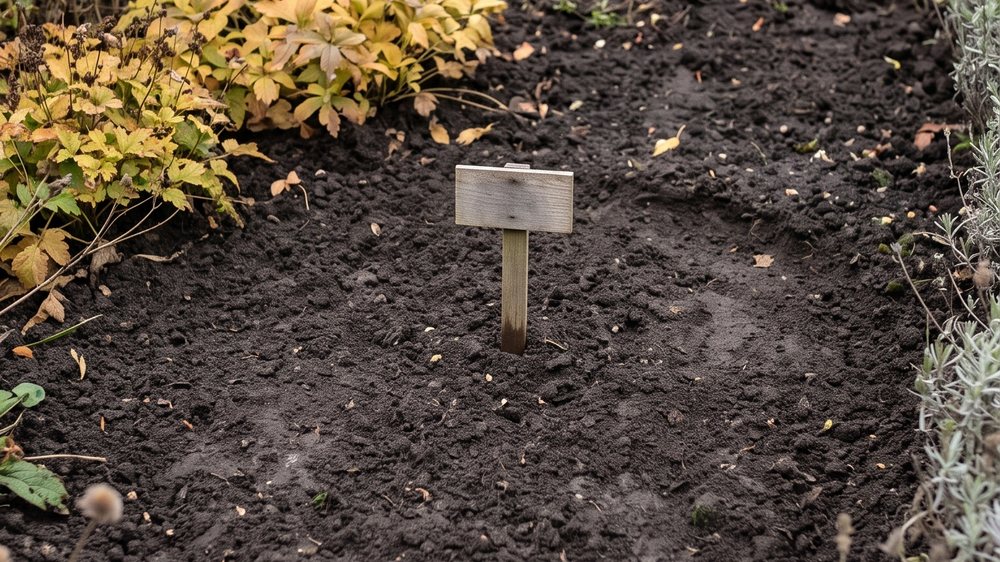
The RHS again: “Do not plant tulips for at least three years in sites where tulip fire has occurred (five years if the disease is grey bulb rot).”
Tulip fire shows in spring as twisted, scorched-looking leaves and shoots that rot off. If that was your bed last April, plant it with something else and put the tulips in pots of fresh compost this year.
Four — depth, which is where most people go wrong
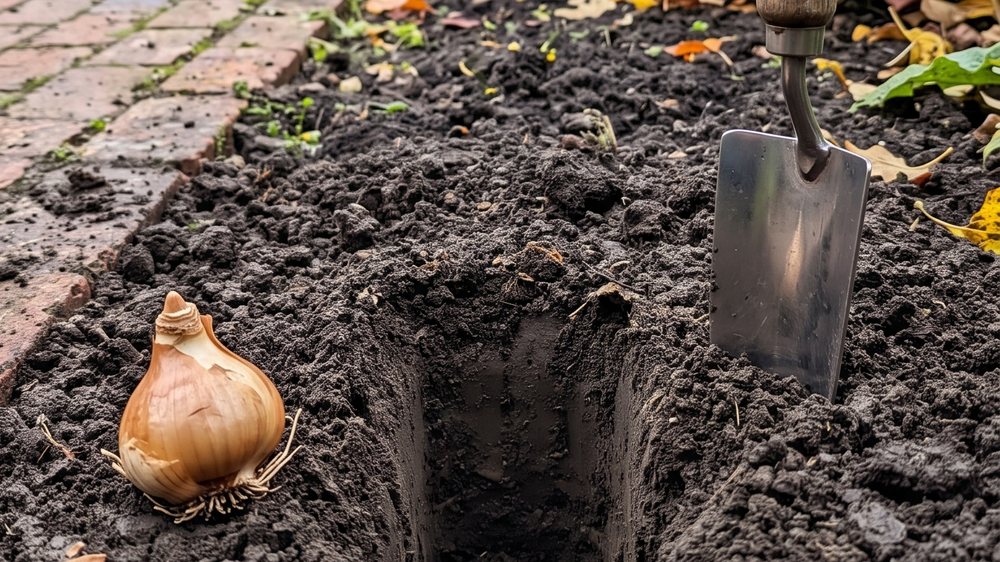
Deeper than feels right, and the sources do not fully agree
The single biggest cause of disappointing bulbs
The RHS general rule: “Plant most bulbs at two to three times their depth. For example, for a bulb measuring 5cm (2in) high, dig a hole 10-15cm (4-6in) deep”, and “space them at least twice the bulb’s own width apart.”
- Gardeners’ World goes deeper for tulips: “plant at least three times the depth of the bulb, pointed end up.”
- Burrough goes deeper still: “generally plant tulips 8 inches deep or more if possible.” That is 20cm — well beyond the RHS rule of thumb.
They do not reconcile, and we are not going to pretend they do. The useful reading is that nobody errs on the shallow side. If you are hesitating between two depths, take the deeper one.
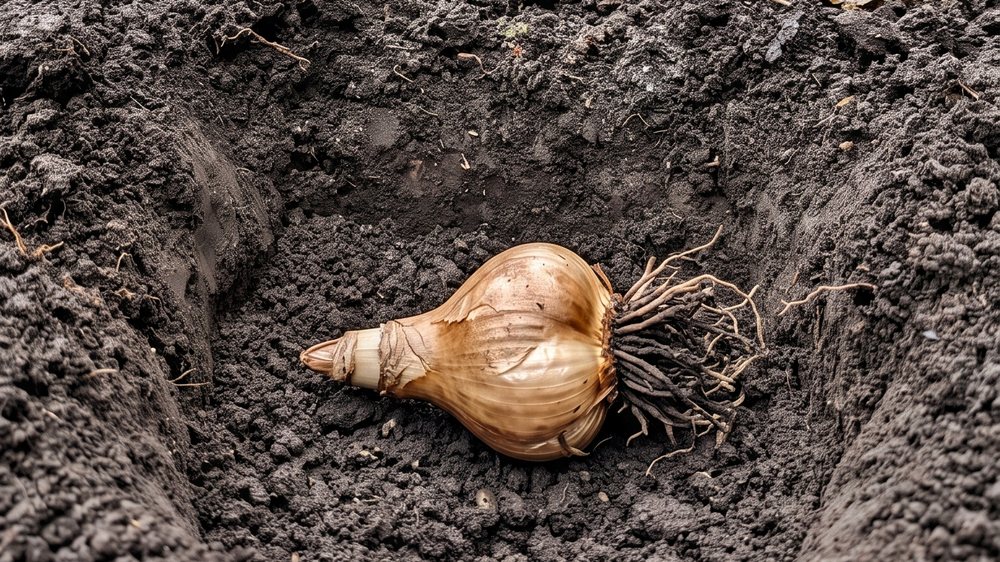
Nose up — and what to do when there is no nose
The question everyone asks and few guides answer
The RHS says to “place the bulbs in the hole with their ‘nose’, or shoot, facing upwards”. Easy on daffodils and tulips. Gardeners’ World says the same but quietly concedes the hard cases, telling you to “check the packet instructions for corms and tubers” — because anemone corms are knobbly lumps with no obvious top, ranunculus claws point downwards, and fritillaries are better off on their side so water does not sit in the hollow crown.
- If you genuinely cannot tell, plant it on its side. Shoots grow away from gravity and roots grow with it, so the bulb sorts itself out underground. ⚠️ This one is received practice rather than a line we can quote — neither the RHS nor Gardeners’ World states it on the pages above.
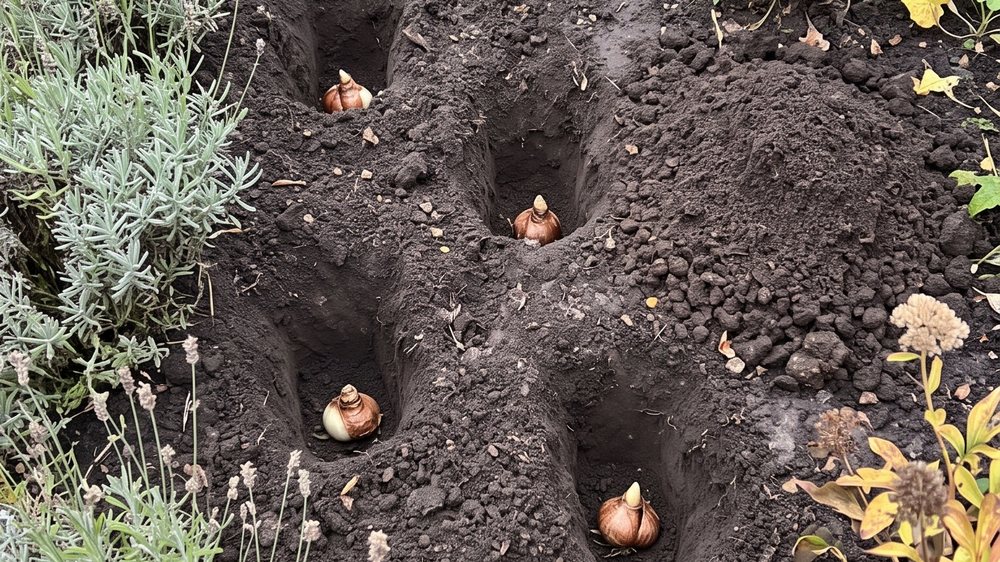
What we looked at and did not link
Two of these are worth knowing about before you buy
No affiliate links anywhere on this site yet
- Hand bulb planters. Check the barrel depth, not the overall length. A common 24cm planter has a barrel of only about 12cm, and it fills with soil — so it cannot reach the depth this page recommends for a daffodil, let alone 8 inches for a tulip.
- Drill augers. Fast in loose worked soil, poor in heavy clay or stony ground. The real caveat is torque: an auger that catches a stone or a root can wrench the drill out of your hands. Use a drill with a working clutch, two hands, and never an impact driver.
- Bulb feeds. The RHS does not recommend feeding at planting. It says to feed “as soon as shoots appear”, with “a high-potassium fertiliser such as a liquid tomato feed” — in spring, and with something cheap and general rather than a bulb-specific product.
Images on this page are stills from the video and are AI-generated; the presenter is not a real person. Sources, all quoted directly: the RHS bulb planting tips, RHS daffodil growing guide, RHS tulip growing guide, RHS tulip fire and RHS bulbs growing guide; Gardeners’ World on growing tulips and its guide to bulb planting depths; and Philippa Burrough of Ulting Wick writing for the National Garden Scheme. Where they disagree we have said so rather than picked one. The side-planting fallback and the preference for drifts over rows are ours, not theirs. Gardening advice is general by nature — soil, aspect, variety and local climate all change the right answer. See how this channel works for how content is sourced and the terms it is published under.
← All kit lists