AD The product link below is an affiliate link. If you buy through it we may earn a commission, at no extra cost to you. It does not change what is said about a product, and nothing is here because it pays.
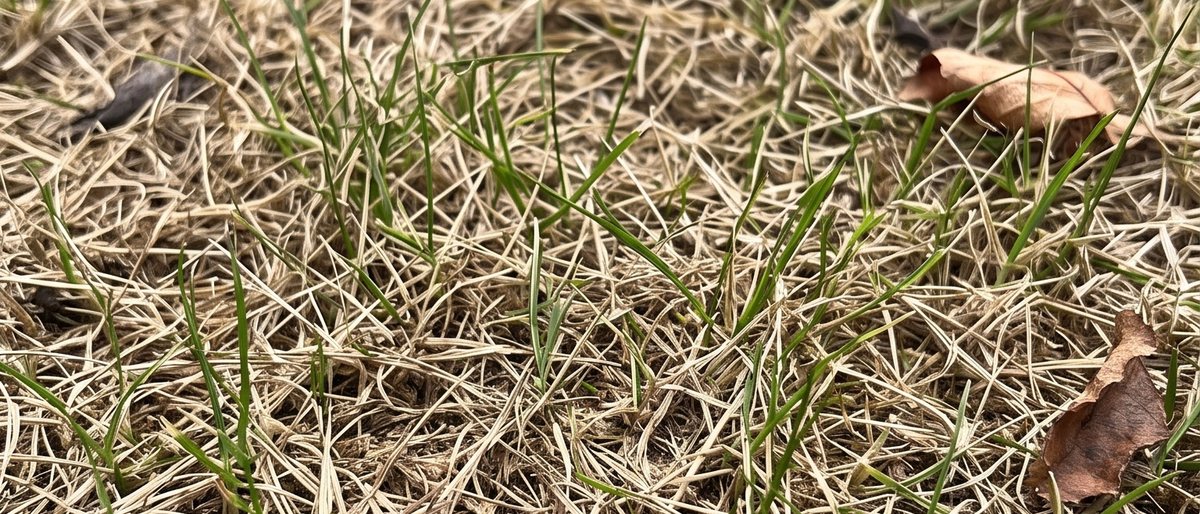
The short version of the video: after a drought, the mistake is mowing too early rather than too late. Green coming through the straw means the roots are alive. It does not yet mean there is anything to cut.
Two tests before the mower comes out
Is the leaf getting longer? Not greener — longer. Colour returns days before growth does. Pick a patch, look at it, and look again three or four days later. If the new blades are visibly taller, it is growing.
Is the ground firm underfoot? The rain that revives a lawn also softens it. The RHS is blunt about this: never mow when ground conditions are very soft, wet or frozen. Mowing saturated turf tears roots that are only just re-establishing and leaves ruts you will be levelling next spring.
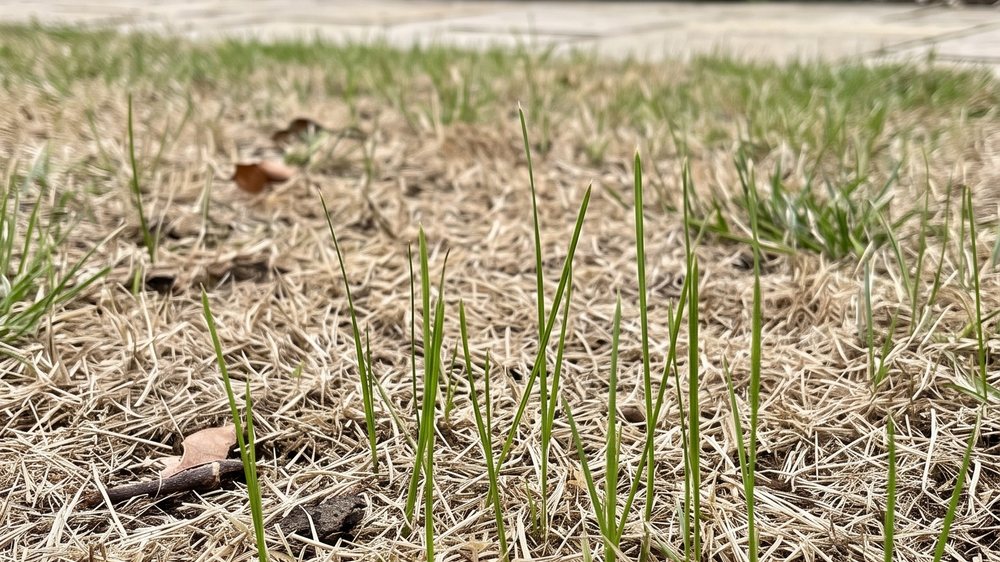
The first cut
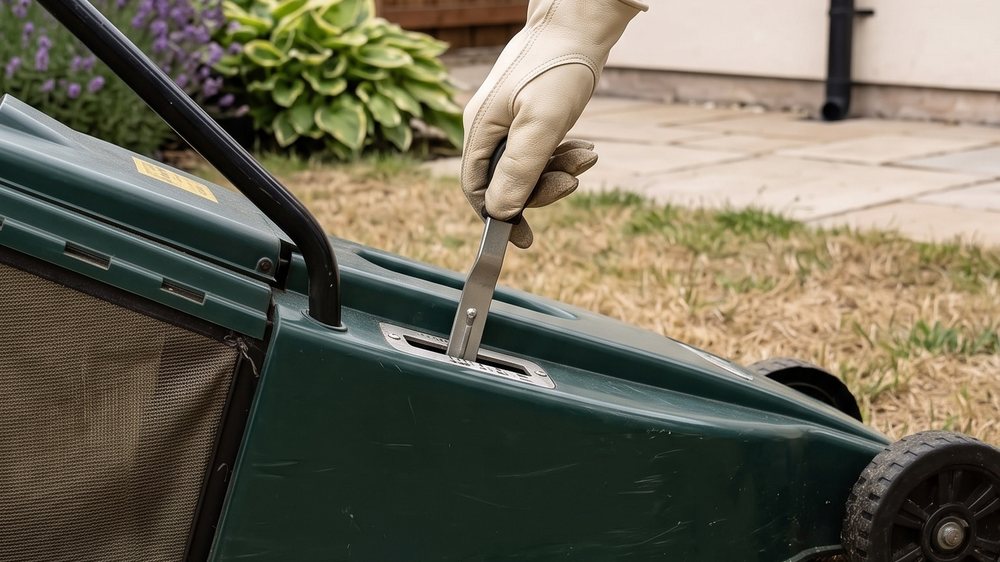
Set it high, then take almost nothing off
Two rules that do most of the work
- Up to 40 mm for autumn. The RHS puts an ordinary domestic lawn at 13–25 mm in summer and up to 40 mm in spring and autumn. Recovering turf wants the top of that range: close cutting in dry weather weakens grass and leaves it more vulnerable.
- Never more than a third of the height in one cut. If the grass has run long while you waited, that means two cuts a few days apart, not one short one. Taking off more in a single pass is what causes the pale, shocked look people blame on the weather.
- Leave the clippings off. Box them for the first cut or two. A drought summer already leaves a mat of dead material at the base; adding to it does not help.
A sharp blade matters more than usual
The one thing worth buying
The RHS puts it plainly: blunt mower blades rip and tear grass, which affects the health of a lawn and looks unsightly. On turf that has spent a summer under stress, a torn leaf tip is a wound on a plant with nothing spare to heal it. This is the one job on this page where the tool makes a real difference to the result.
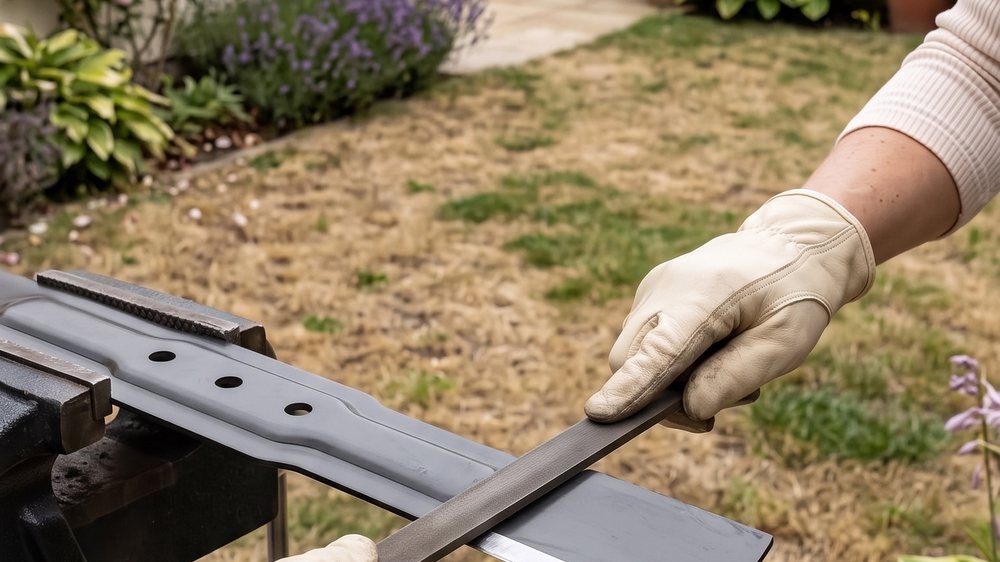
- Sharpen the right part. The cutting edge runs along the long leading edge of the bar, over roughly the outer third at each end — not across the tip. The two edges sit on opposite sides of the bar, because it spins. The middle of the bar and the trailing edge are never sharpened.
- File the top face only. Toro's own service guidance is to grind the top surface and keep to the angle already on the blade; grinding the underside produces a chisel shape rather than a cutting edge. Around 30° is the usual angle on a domestic blade.
- A flat hand file does the job and is what the video shows. Take the blade off, clamp it across the middle, and follow the bevel that is already there — you are restoring an edge, not reshaping it. It does not need to be razor sharp; a clean edge that will not tear is the target.
- A drill-mounted sharpener is faster if you would rather not do it by hand, and holds the angle for you. The Multi-Sharp MS1301 fits any standard power drill, corded or cordless, and its reversible corundum wheel is rated for roughly ten sharpenings.
- Balance the blade afterwards if you have taken much off one end. An unbalanced blade vibrates and wears the mower's bearings.
Always disconnect the spark plug, or the battery, before going near the blade.
See the Multi-Sharp blade sharpenerWondering whether to feed a lawn that has come through a drought? That is a bigger question than it looks, and it gets its own video and kit list rather than a footnote here.
Images on this page are stills from the video and are AI-generated; the presenter is not a real person. Guidance on mowing heights, the one-third rule, ground conditions and blade sharpness is from the RHS mowing and RHS drought care pages. Gardening advice is general by nature — soil, aspect and drainage all change the right answer. See how this channel works for how content is sourced and the terms it is published under.
← All kit lists