No products on this page. Four of the five fixes below need nothing you do not already own. The fifth needs a root barrier, and we are not linking one until we have found a maker we can actually stand behind — see the note at the end. Nothing here is an affiliate link.
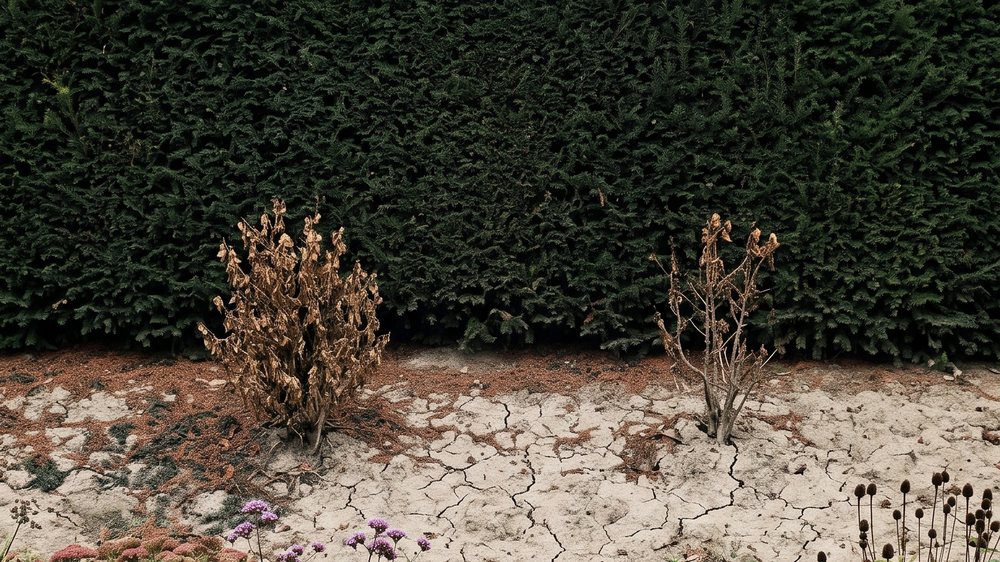
You put three good plants in at the back of the border and they died. You did not kill them. The hedge did — and it will do the same to the next three unless you change something.
Why it happens
A mature hedge is a row of large shrubs with the root system to match, and those roots do not stop at the edge of the hedge. They run out sideways through exactly the ground you are trying to plant into, and they get to the water and the feed first because they were there first.
Gardeners’ World puts it plainly for the worst offender, Leyland cypress: “Leyland cypress take nutrients and water from the soil and create areas of deep shade,” and “the soil around an established leylandii hedge will be low in nutrients.” The RHS makes the same point about planting under trees and hedges generally — plants there are “deprived of moisture and nutrients” by “strong competition from the trees” — and singles out conifers as the hardest case of all, because you get dry soil, year-round shade and a build-up of needles at once.
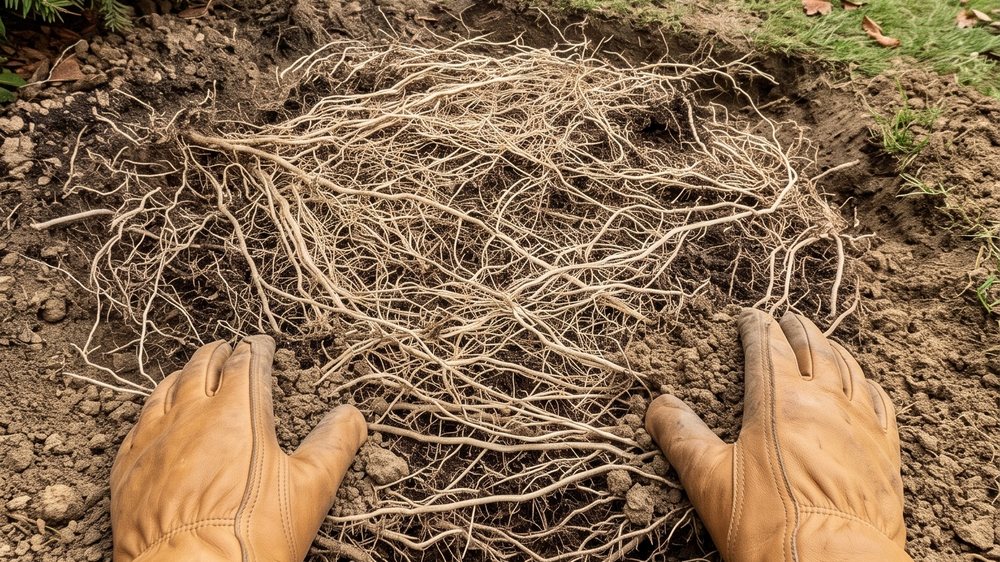
That is the thing worth understanding before you spend any money: the soil in that strip usually is not poor in the way a soil test would show. It is occupied. Anything you add to it is being drunk by something else.
Five fixes, cheapest first
Work down this list and stop at the first one that is enough. Most people do not need to get past the third.
One — stop fighting it and plant something that copes
Free
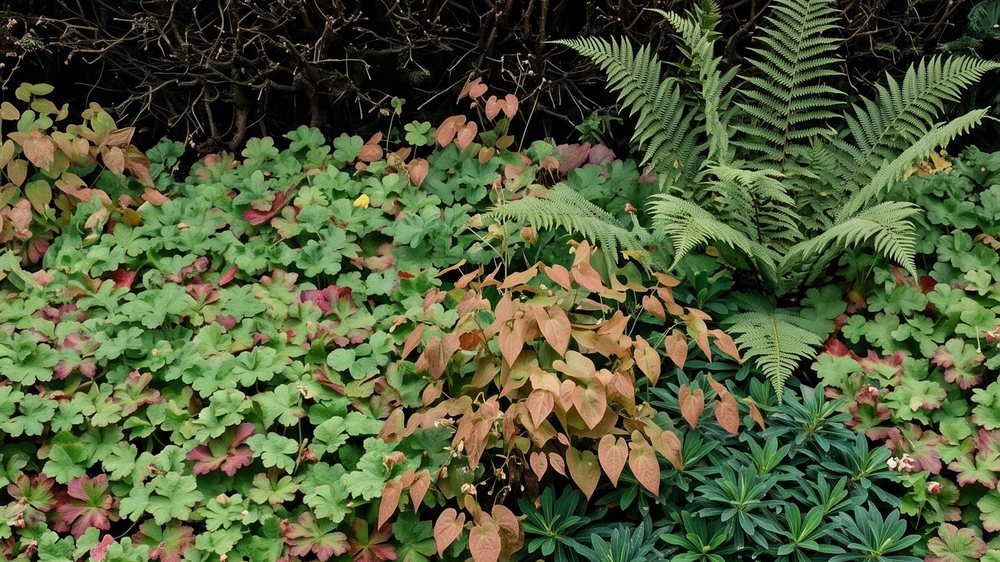
Dry shade at the foot of a hedge is a real growing condition with a real plant list, and it is not a short one. Geranium macrorrhizum, epimedium, Euphorbia amygdaloides var. robbiae, male ferns, bergenia, Liriope muscari. These are not consolation prizes — they will knit into dense ground cover where a hydrangea sulks and dies.
If the border is a mixed one and the hedge only ruins the back half, this is the whole answer. Change the plant, not the soil.
Two — feed it and mulch it, properly
A few pounds a year
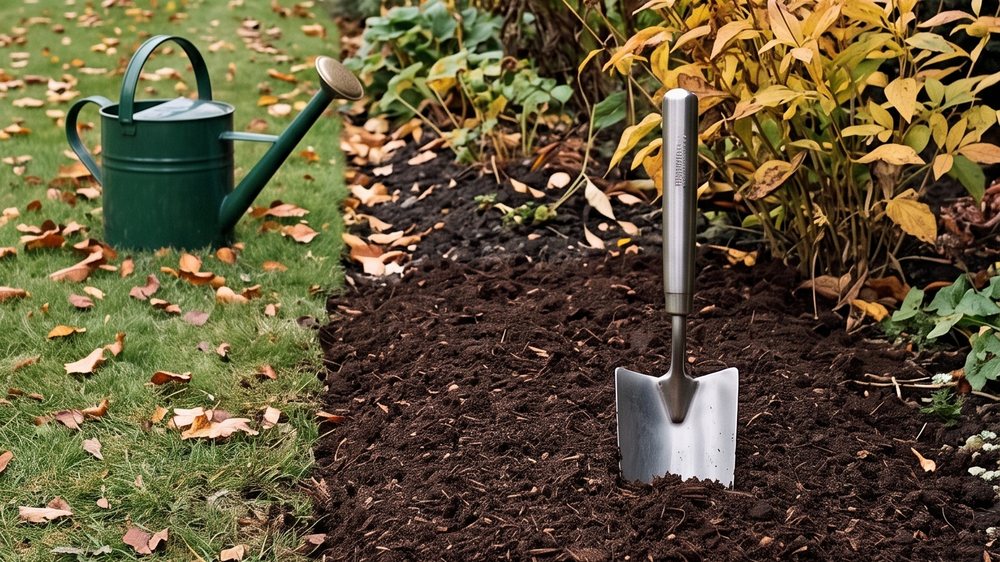
Dig in plenty of organic matter before you plant, mulch thickly every spring, and — the part everyone skips — water through the whole of the first season, not just the first fortnight. A new plant in that strip is competing with an established root system for every drop.
This buys you a wider plant list. It does not buy you a free hand.
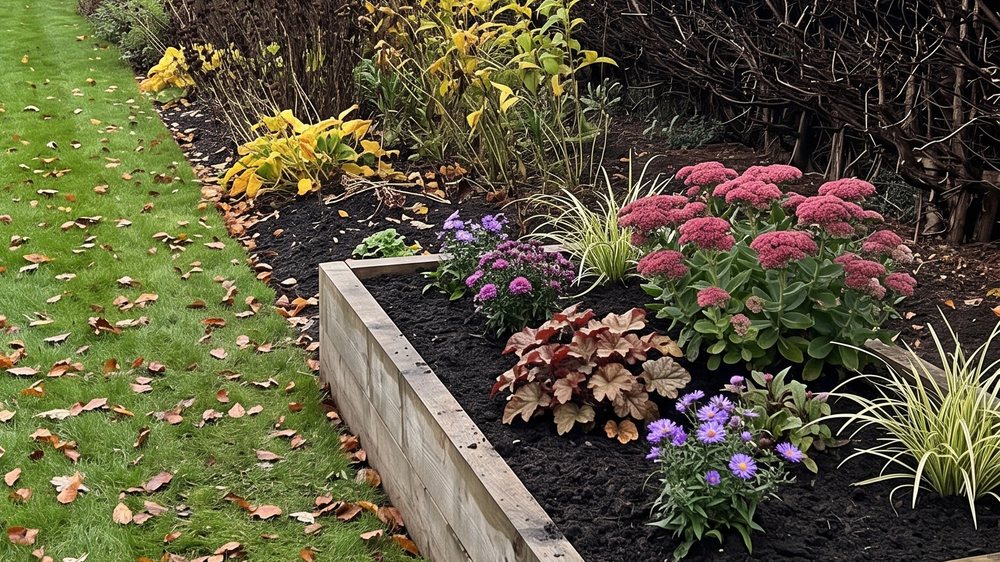
Three — build up instead of digging down
A few boards and a load of topsoil
Gardeners’ World suggests this one directly for the leylandii case: “adding raised beds with good quality top soil and garden compost will help plants establish in areas near leylandii hedges.”
You are giving new roots a layer of their own to get going in, above the competition rather than in it. The hedge will find its way up eventually, but a plant that has had two seasons to establish is a different proposition from one that never got started.
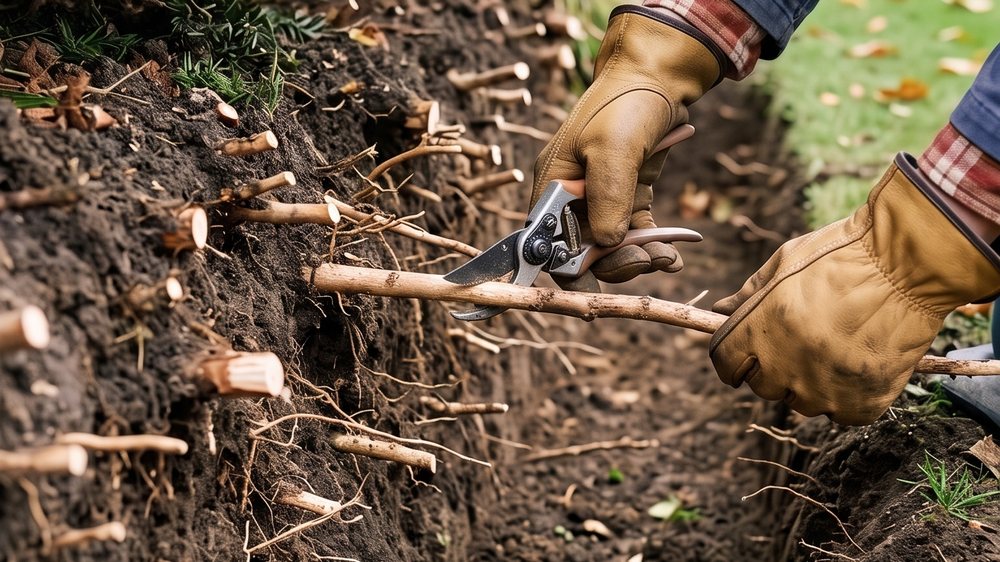
Four — trench along the hedge once a year
An afternoon, annually
The RHS publishes this method for controlling bamboo, and the principle is the same: “dig a trench about 30cm (12in) deep and the width of spade’s blade”, sever what you find in it, and repeat “at least once a year.”
The trench goes between the hedge and your planting, tight against the foot of the hedge — not out at the front of the border. Its whole job is to intercept roots on their way from one to the other. Dug in the wrong place it cuts your own plants off and leaves the hedge untouched.
It costs nothing but it is a standing job. Miss two years and you are back where you started.
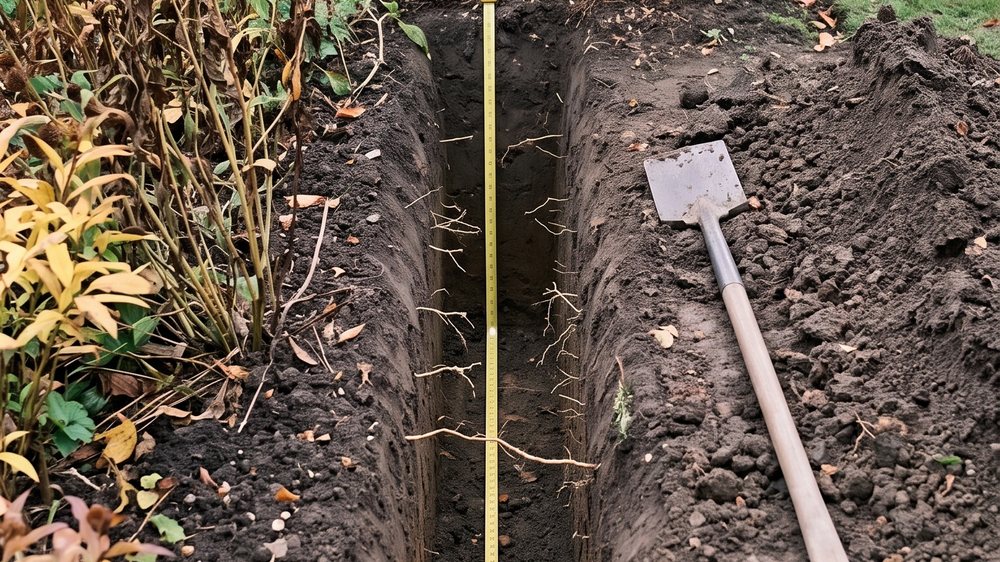
Five — trench once, properly, and line it
A weekend, and real money
The permanent version. Same trench, but deeper, with a physical barrier left in it so the roots cannot come back. The RHS bamboo guidance is where the numbers come from:
- Trench at least 60cm (2ft) deep.
- Use a purpose-made root barrier — “purpose made bamboo root barriers are easiest to handle and insert”. Slabs and sheet metal get used, but “care is needed to avoid gaps that rhizomes could grow through.”
- Stand it at least 7.5cm (3in) proud of the soil, or roots simply travel over the top of it.
- Overlap any join by at least 30cm (1ft) and bond it “with appropriate mastic”. An unsealed joint is a door.
Almost all of that barrier ends up underground. Only the last three inches show.
Our view
Those four numbers are published by the RHS for bamboo, not for hedges. We have not found a UK horticultural body that puts a trench depth or a barrier spec on hedge roots specifically. We think the principle carries over — it is the same job, stopping a woody root system crossing a line underground — but we would rather tell you that than let you assume the RHS said it about your leylandii. If you only trench to 45cm because that is what your spade reaches, you have a shallower barrier and roots will eventually go under it.

Do not use damp-proof course
This is the trap, because it is cheap, it is on the shelf, and it looks like the right thing. It is not, on two separate counts.
It is too thin. A typical 2000-gauge DPC is 0.5mm of recycled LDPE, made and certified to a damp-proofing standard. A root barrier wants 1–2mm of HDPE. Roots find the weak spot in thin polythene and go through it, and you will not know until the planting starts failing again years later.
And it is too narrow. The common roll is 450mm wide. You need to line a 600mm trench and stand 75mm proud of it. The arithmetic does not work: it physically cannot reach, whatever its thickness.
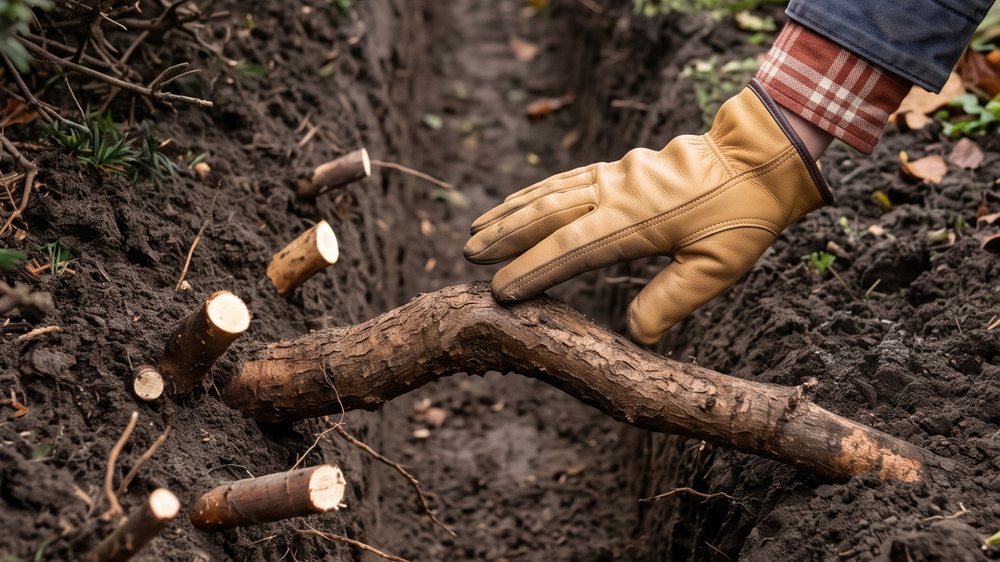
The one rule that matters while you dig
Severing fine roots is not a problem. Penn State Extension is direct about it: “fine-haired tree roots will regenerate if disturbed.”
Big structural roots are a different matter, and they give the one genuinely important instruction on this page:
If you uncover a root two inches across or more, stop
Penn State Extension: “if you uncover a root two inches or more in diameter, refill the hole and move to a new location.” Two inches is about 50mm — roughly two fingers side by side.
Those roots are holding the hedge up. The same guidance adds: “do not cut exposed roots with an ax, which could make a tree unstable.” Cover it back over and carry on either side of it. A barrier with a gap where a big root passes through is still worth having; a hedge that comes down in a gale is not.
And if the hedge is not yours, or it sits on a boundary, the digging is only half the question — talk to whoever owns it before you start cutting anything.
Images on this page are stills from the video and are AI-generated; the presenter is not a real person. The description of root competition is from Gardeners’ World on planting under a leylandii hedge and the RHS on planting under trees and hedges; the trench and barrier specifications are from the RHS guide to bamboo control in gardens, which publishes them for bamboo rather than hedges — see “our view” above; the root-cutting threshold is from Penn State Extension on planting under trees. We have not named a root barrier product because we have not yet found a UK supplier with a verifiable company behind it and its own published specification — when we do, we will say so. Gardening advice is general by nature — soil, aspect, variety and local climate all change the right answer. See how this channel works for how content is sourced and the terms it is published under.
← All kit lists