No products on this page. This job needs a garden fork and, for the tough ones, a second fork or a spade — things almost every shed already has. There is nothing to sell you and nothing here is an affiliate link.
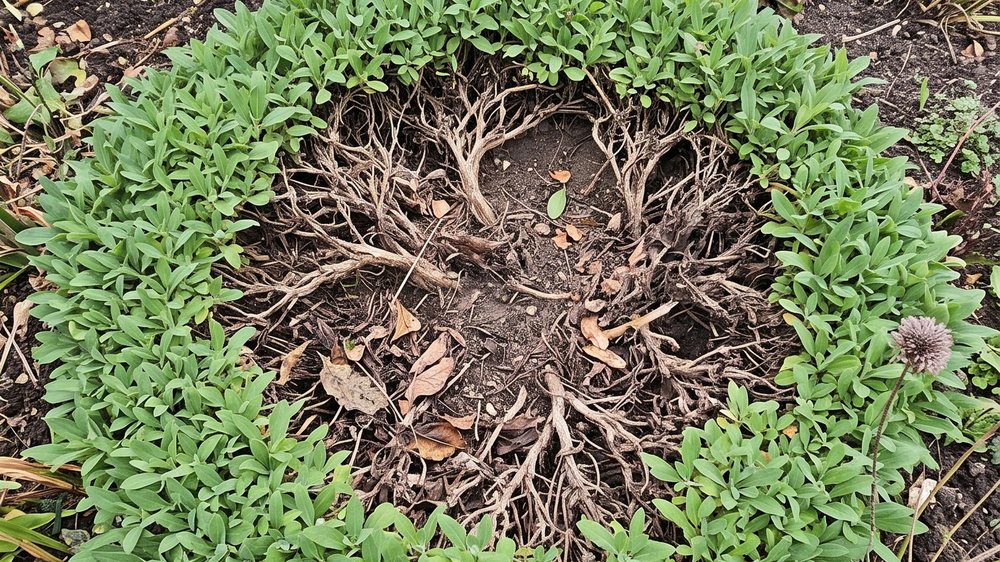
A congested clump flowers less, and the middle of it is already dead. Split it and you get three or four plants where you had one, for nothing but an afternoon. The RHS puts the interval at every two to three years for most perennials — so if yours went in a decade ago, they are well past it.
When
The RHS gives two windows for summer-flowering perennials: “in spring (Mar-May) or autumn (Sep-Nov) when the soil is dry enough to work. In wet autumns, delay until spring.”
That last clause does the work. Autumn is a window, not a deadline — if the ground is wet and claggy, you are doing more harm than good and spring is the better bet. Spring-flowering plants such as irises go in “summer (Jun-Aug) after flowering” instead.
One — what divides
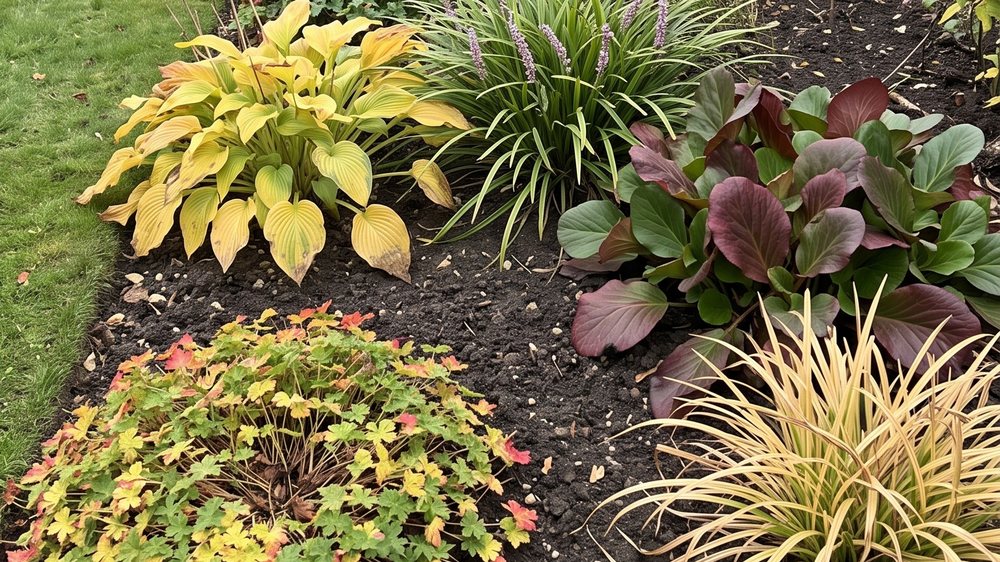
Clump-forming herbaceous perennials
Many soft shoots, straight out of the soil
Hardy geraniums, hostas, day lilies, bergenia, liriope, brunnera, heuchera, astrantia, hellebores and ornamental grasses. The common thread is the shape: the plant comes up as a crowd of soft shoots from the ground, not as a stem.
- The test beats the list. Look at where the plant meets the soil. Lots of separate shoots means it divides. One hard woody stem means it does not.
- Planted more than three years ago? It is probably ready. Bare middle, fewer flowers and a clump creeping outwards are the signs.
Two — and what you would kill
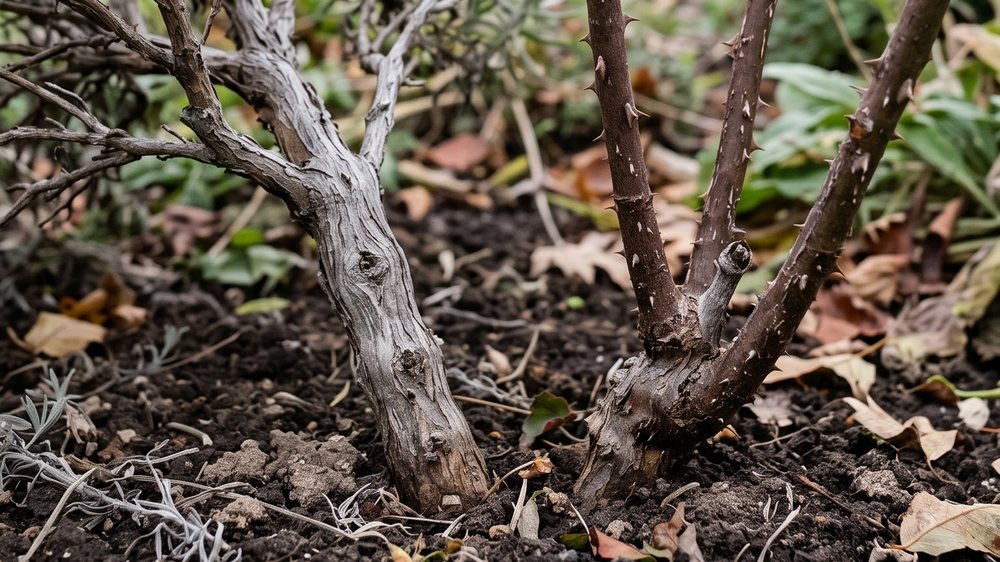
Anything woody
The mistake that does not grow back
Lavender, rosemary, roses, photinia, smoke bush, hydrangea, laurel, box. These come up as permanent wood — a trunk, or a few rigid canes from a single base. There is no clump to pull apart, and a lavender cut back into old wood does not reshoot.
- Woody plants are propagated by cuttings, not division. Different job, different season, and worth doing — just not this one.
- Suckering shrubs are the trap. Several stems from the ground looks like a clump until you notice they are woody. The word doing the work in the test is soft.
Three — the method follows the roots
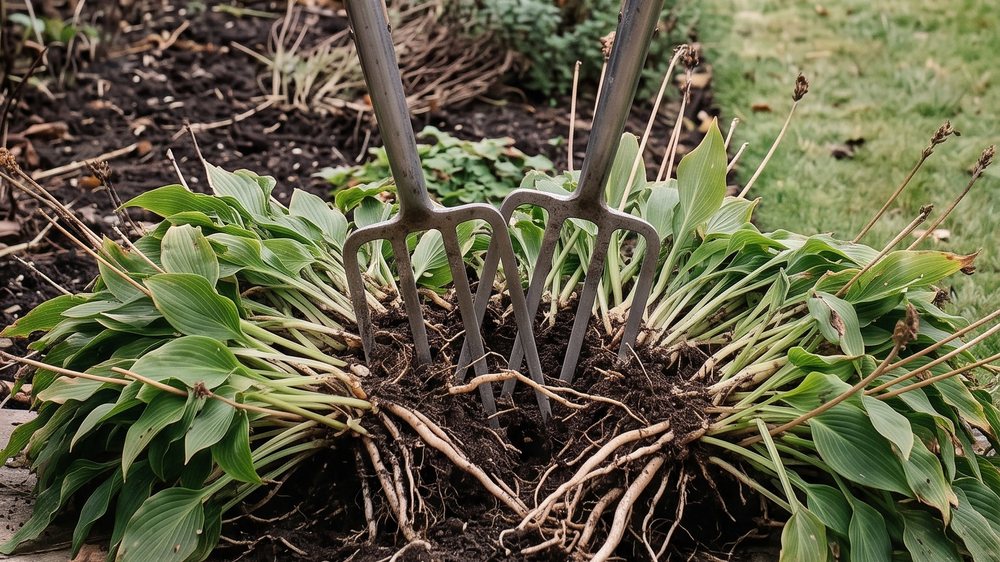
Three root types, three tools
Lift the whole thing first — you can’t really hurt it
Get the clump right out of the ground with a fork, shake the soil off so you can see what you are dealing with, and then pick the method by what the roots look like. The RHS splits it three ways:
- Small fibrous roots — heuchera, hosta, epimedium. These are “lifted and pulled apart gently” with your hands. No tool.
- Large fibrous roots — day lilies. These need “two garden forks inserted into the crown back-to-back. Use these as levers to loosen and break the root mass.” Backs together, through the middle of the crown, then work the handles.
- Woody crowns and fleshy roots — hellebores, delphiniums. These want “cutting with a spade or knife.” Commit to it; a timid cut tears more than it severs.
Whichever you use, the target is the same: “clumps containing three to five healthy shoots.” Smaller than that and the division sulks for a year.
Four — keep the outside, bin the middle
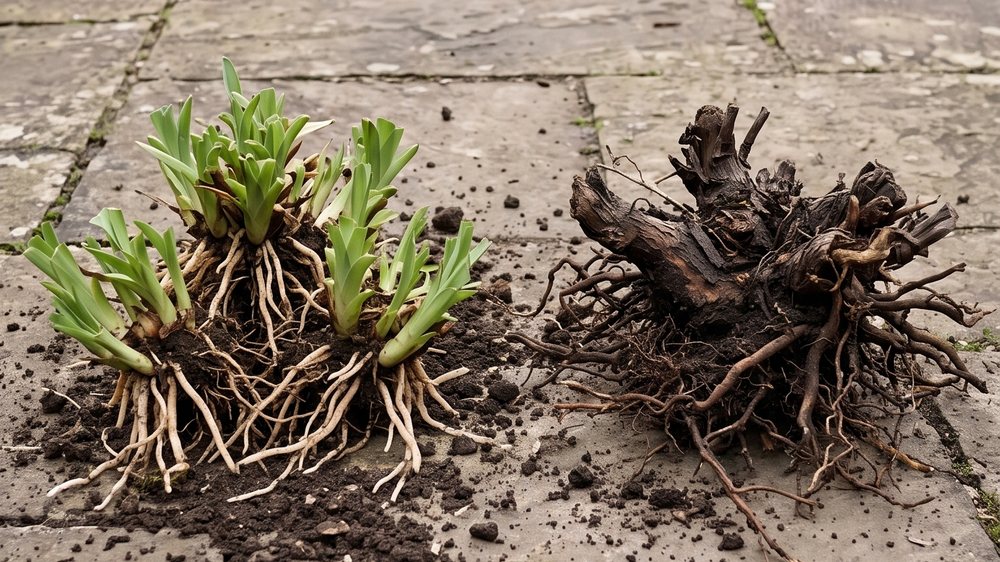
The young growth is on the edge
Throwing away half the plant is the right answer
A clump spreads outwards and exhausts its own centre. Everything worth keeping is the ring round the outside — fresh pale roots, green shoots. The dark woody middle is what stopped flowering, and it will not start again.
- Bin it or compost it, but do not replant it. Putting the old centre back is the commonest way to end up with the same tired plant.
- Be ruthless about size. Three to five shoots a piece. Two big divisions beat six weak ones.
The exception
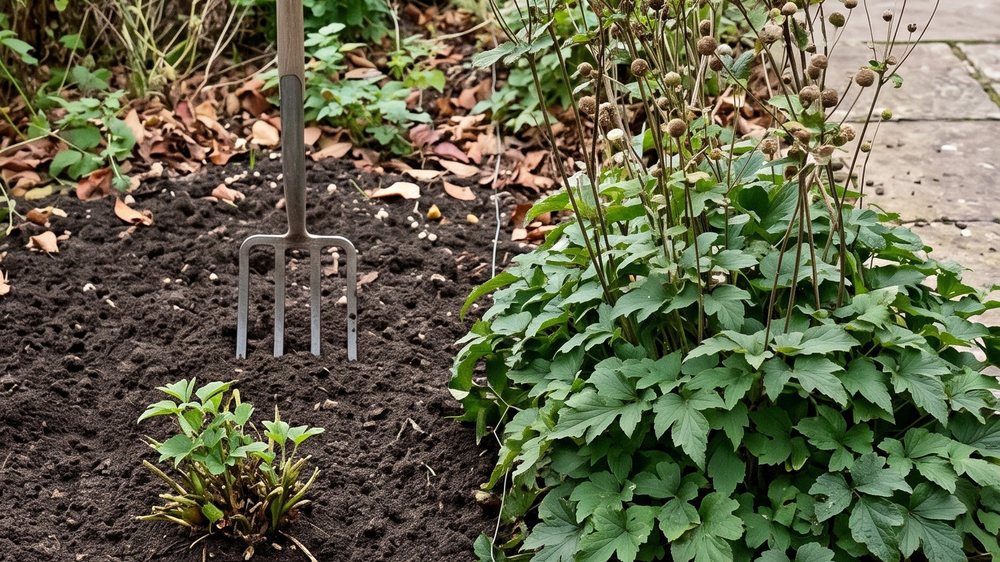
Japanese anemones wait for spring
Worth knowing before you lift one
Division of Japanese anemones is, the RHS says, “best done in spring” — and more to the point, “plants can be slow to recover and may take a year to start flowering again.”
That is not the same as saying they resent being moved. It is a warning about the recovery, not the survival. But if you want flowers next autumn, leave them alone this one and do it in March.
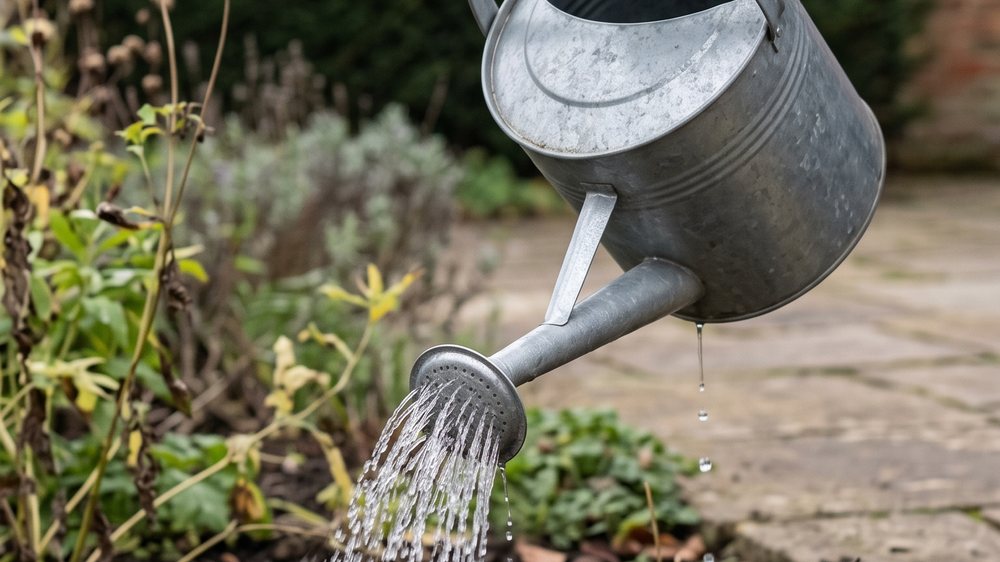
Everything else in the border that comes up as a crowd of soft shoots is fair game while the soil still works. Lift it, split it, replant it the same day, water it in. You end up with more plants than you started with and the ones you keep flower better for it.
Images on this page are stills from the video and are AI-generated; the presenter is not a real person. Guidance on timing, root types, method and aftercare is from the RHS guide to dividing perennials, and the Japanese anemone guidance from the RHS Japanese anemone growing guide. The list of what not to divide is ours, not theirs — it follows from the fact that every plant in the RHS method table is a herbaceous clump-former and that woody plants are propagated from cuttings, but the RHS does not set it out that way. Gardening advice is general by nature — soil, aspect, variety and local climate all change the right answer. See how this channel works for how content is sourced and the terms it is published under.
← All kit lists